


Building a Person, Not a Stat Block — Character Creation in Threshold
Every system makes a statement with its character creation sequence. The order of steps, what gets a full page versus a sidebar, what's mechanical and what's fiction — all of it communicates what the game thinks a character is. This post covers how Threshold approaches that question, why the sequence is built the way it is, and what fell apart before the current version came together.
The Foundational Problem
Character creation is the first thing a player does with your game. It's the system's handshake—the moment when an abstract rulebook becomes a specific person at a specific table. Get it wrong and players arrive at session one feeling like they assembled a spreadsheet. Get it right and they arrive already invested.
The tension at the heart of character creation design is between two legitimate needs: players need enough mechanical structure to make informed choices, and they need enough creative space to feel like they're building someone real. These pull against each other constantly. More mechanical front-loading gives players clarity but turns creation into optimization. More narrative front-loading gives players immersion but risks leaving them adrift when the numbers have to be filled in.
Most systems resolve this tension by sequencing mechanics first—abilities, class, race—and then appending fiction as a finishing step. Personality traits, backstory, physical description come last, after everything that "matters" is locked in. The implicit message is clear: the numbers are the character. The fiction is decoration.
I didn't want that message in Threshold.
The design philosophy here is fiction first. Not fiction only—this is still a game with statistics and dice pools. But the sequence is built around a simple conviction: players should be constructing an actual person before they're constructing a collection of stats. Whether most players follow that sequence faithfully is beside the point. A dedicated min-maxer will skip ahead to the numbers regardless of what the book says. But for the average player—especially someone newer to TTRPGs—the order of questions communicates what the game values. If the first question is "what are your ability scores," the implicit answer is that ability scores are what a character is. If the first question is "who are you and why do you adventure," the implicit answer is different.
The sequence in Threshold is structured as a series of questions, each one building on the last. Every step asks the player something specific about the person they're creating before asking them to make a mechanical choice. That structure isn't accidental—it's the whole point.
What I Learned From Other Systems
Character creation sequences are a design statement, and the variety across systems is worth examining closely before explaining why Threshold made the choices it did.
D&D 5e — Two Sequences, Neither Starting With Concept
Fifth edition is the reference point for most players coming to Threshold, which makes it worth examining carefully. What's less commonly noted is that D&D 5e doesn't have one character creation sequence—it has at least two, and they don't match each other.
The Player's Handbook recommends: Race > Class > Ability Scores > Describe (alignment, background, personality) > Equipment. DNDBeyond—the platform most players actually use—presents: Class > Background > Species > Ability Scores > Equipment. The two official sources for the same game give meaningfully different sequences. Neither one leads with concept. In both versions, mechanical identity—what you are, what role you fill—comes before fictional identity—who you are, what drives you, why any of this matters.
That inconsistency reveals something. It suggests D&D treats sequence as largely arbitrary—a practical guide through a checklist rather than a deliberate design statement about what a character fundamentally is. The implicit message in both versions is consistent even if the order isn't: the numbers are what matter. The fiction fits around them wherever it lands.
PF2e — ABCs and Mechanical Clarity
Pathfinder 2e does something D&D doesn't: it gives you a mnemonic. Don't forget your ABCs—Ancestry, Background, Class. The three-pillar structure is clean, memorable, and clearly delineated. Each pillar contributes specific mechanical outputs, and players always know what they're getting from each step.
What I genuinely admired here was the separation of Ancestry from Background. These are genuinely different things—biology and circumstance—and treating them as distinct steps acknowledges that distinction rather than collapsing everything into a single "race" choice. The limitation is that both pillars are primarily mechanical in their presentation. The fiction exists in flavor text you read before checking boxes. PF2e is an optimization-friendly game, and its creation sequence reflects that honestly: it's designed for players who want mechanical clarity and build depth, and it delivers both.
PbtA Games — The Playbook Model
Blades in the Dark, Monster of the Week, Kids on Bikes, and most Powered by the Apocalypse games use playbooks: pre-packaged character concepts that bundle fiction and mechanics together from the start. You don't choose a class and figure out who you are afterward—you choose an identity and the mechanics follow from it. The playbook tells you simultaneously what your character does, how they're perceived by the world, and where their mechanical strengths lie.
This is enormously efficient and accessible. New players can be up and running in minutes because the conceptual heavy lifting has been done for them. The limitation is the other side of the same coin: you're choosing from a curated menu of identities rather than constructing one from scratch. The fiction is bundled, not built. For Threshold—a classless system specifically designed around freeform character construction—the specificity of playbooks would be a constraint rather than a feature.
Lifepath Systems — Cyberpunk, Traveller
Cyberpunk RED and Traveller use Lifepath generation: you move through a sequence of life events that produce your character's history and statistics simultaneously. The fiction and the mechanics are generated together, sometimes with randomness involved. Your backstory isn't something you write—it's something that happened to you during creation.
Lifepath systems produce characters with genuine, often surprising history. They can also be slow, can generate characters with significant mechanical disadvantages if luck runs badly, and require players to surrender meaningful control over the outcome. Classic Traveller famously allowed characters to die during generation—a feature some players loved and others found baffling. For a game like Threshold where mechanical choices are interconnected and intentional, surrendering that control creates more friction than it resolves.
OSR and the Random Generation Tradition
Mörk Borg, Cairn, and most OSR games lean into randomness even further. Roll your stats, roll your starting equipment, roll your background—sometimes roll your class. The resulting character is a surprise, and the creative act is building fiction around whatever the dice produced.
There's genuine design wisdom here. Random generation forces players out of optimization thinking—you can't min-max a character you didn't choose. The character that emerges from the dice often feels more distinct and unexpected than one built deliberately. But Threshold's systems are interconnected enough that random stat generation could produce characters who are mechanically misaligned with their concept in ways that aren't interesting to play around. The randomness that liberates in a rules-light OSR context creates problems in a more structured system.
City of Mist — Questions as Creation
City of Mist sits closest to what I was reaching for philosophically, which is why I'm covering it last. Creation in City of Mist is built around answering questions about your character's Mythos—the legendary archetype you embody—and your Logos—your mundane human identity. Theme cards emerge from those answers. The mechanics follow the fiction rather than preceding it. You never feel like you're filling out a form; you feel like you're discovering someone.
The question-driven approach is exactly the instinct I was trying to capture. The limitation is that City of Mist's question structure is inseparable from its specific fictional premise—the tension between mythic identity and ordinary life is the entire engine of the game. That premise doesn't translate to a general fantasy system. What does translate is the underlying principle: if the questions are right, the character builds itself.
What I Took Away
Every approach above is optimized for something. D&D's flexibility serves players who already know what they want. PF2e's structure serves optimization depth and build clarity. Playbooks serve accessibility and speed. Lifepaths serve emergent, surprising narrative. Random generation serves the anti-optimization impulse and forces creative problem-solving. City of Mist's question structure serves character-first construction at the cost of fictional specificity.
What I wanted for Threshold was something that borrowed the core instinct from City of Mist—questions driving decisions—without being locked to a specific premise. A sequence that teaches players how to think about their character by asking the right things in the right order. Not a playbook. Not random. Not mechanics-first. A guided conversation, where each step follows naturally from the last and the mechanical choices feel like they're serving a person rather than producing one.
The Sequence
Threshold's character creation has ten numbered steps and one optional callout. Each step is anchored to a specific question. The questions aren't decorative—they're the point. The mechanical choices exist to answer them.
Step 0: Concept — "Who are you, and why do you adventure?"
Before touching a single number, settle on an idea. Who is this person? What do they want? What are they running toward, or away from? What would they refuse to do regardless of the stakes?
This step has no mechanical output. Nothing here goes on the character sheet. It exists entirely to establish the person that every subsequent decision should serve. Some players will arrive at the table with a concept already locked—a character they've been thinking about for weeks. For them, this step is a confirmation. For everyone else, it's permission to think about a person before thinking about a build. The question "who are you" has to be asked first, because if it's asked last, it gets answered by whatever the numbers happened to produce.
The Optional Archetype
Between Step 0 and Step 1, players can choose an Archetype—a proven build template that shows how Threshold's pieces fit together into a functional character concept. Archetypes are suggestions, not constraints. They exist for players who want a foothold: a working example that demonstrates how Heritage, Kit, Skills, and Techniques can combine before they've developed the system fluency to build freeform.
Experienced players and anyone with a clear concept from Step 0 can skip this entirely. After character creation concludes, the Archetype means nothing—characters grow in any direction regardless of where they started.
Step 1: Heritage — "What people do you come from?"
Heritage covers the physical traits, innate capabilities, and deep biological patterns shaped by your people's long history with the world. Not values, not upbringing, not the community that raised you—those come later. Heritage is the question of ancestry and biology: what does your body know, what do your instincts carry, what marks did your lineage leave on you before you were old enough to choose anything?
The decision to separate Heritage from Culture was deliberate and matters more than it might initially appear. Most systems bundle these together under "race"—you're an elf, so you have these traits and these cultural tendencies and these skill affinities, all delivered as a single package. That bundling is convenient, but it conflates genuinely distinct things. What you are biologically and how you were raised are different questions that deserve different answers. A character can be one Heritage and have been raised in a community built around an entirely different one. Keeping the steps separate makes that possible and makes the combinations interesting.
Step 2: Culture — "What community raised you?"
Culture covers the community that shaped your formative years—the values it instilled, the skills it considered essential, the social context you absorbed before you knew you were absorbing it. Mechanically, Culture grants 2 free skill trainings that don't count against your starting AP budget.
Those free trainings represent something specific: competence you didn't choose. Nobody decides as a child to become comfortable with a particular set of tools or social assumptions—they just become comfortable because that's what surrounded them. A character raised in a fishing village knows boats and weather patterns the way someone raised in a court knows ceremony and hierarchy. Neither chose that knowledge deliberately. Culture is how the system represents the things you know because of where you came from, distinct from the things you later chose to invest in.
Step 3: Background — "What did your life look like before this?"
This is where Threshold makes its most deliberate departure from convention—and where the word "Background" itself requires some unpacking, because Threshold uses it to mean something different from what most TTRPG players will expect.
In D&D 5e, your Background is a package: skill proficiencies, tool proficiencies, languages, a feature, and some flavor text. In PF2e, it contributes ability boosts and skill training. The word implies history but the mechanics deliver a build component. The logic is intuitive enough—your life before adventuring trained you in certain ways, and those ways should appear in your stats.
That logic isn't wrong. The problem it creates is that Background becomes an optimization vector. Players stop asking "what did this person's life actually look like" and start asking "which Background gives me the skills I need." The fiction becomes a label stretched over a mechanical decision that was made for entirely different reasons.
Threshold's Background is better understood as Social Class—the economic and social world you came from before adventuring, and the narrative context that explains how you ended up here. The mechanical output is a single number: your starting Wealth Score. Marginal backgrounds begin with WS 1—exiles, refugees, runaways, the dispossessed. Low backgrounds begin with WS 2—laborers, soldiers, farmers, sailors, people with modest means and practical skills. Middle backgrounds begin with WS 3—artisans, merchants, scholars, minor officials with professional standing who chose to leave, lost it, or were pushed out. Elevated backgrounds begin with WS 4—officers, guild masters, minor nobles, senior clergy—rare at the table, requiring a specific reason why someone with that much standing is here at all.
That's the entire mechanical footprint of this step. Everything else is fiction.
Once social class is chosen, the player gives their background a name and a sentence or two of context. This is narrative, not mechanical. But the narrative prompt has a specific shape: it should answer two questions. What did you do before? And what changed?
The second question is the one that matters. "What did you do before" produces a description. "What changed" produces a character. An ordinary person has a life and a history. An adventurer has a life, a history, and a rupture—something that made the ordinary life no longer possible, no longer sufficient, or no longer safe. That rupture is what brings someone to the table.
The example backgrounds within each class illustrate the range. Marginal examples—Exile, Escaped Slave, Wandering Penitent, Former Cultist—tend to carry their rupture inside the label. The "what changed" question is already half-answered before the player writes a word. Elevated examples do the same from the opposite direction: Disgraced Officer, Minor Noble in Hiding, Guild Master Turned Fugitive. Someone with that much standing doesn't end up at an adventuring table without a story, which is exactly why GM approval is recommended—not to gatekeep the option, but to ensure that story exists and has been thought through. Low and Middle examples—Soldier, Farm Hand, Scholar, Guild Artisan—are more neutral. The label describes a life without implying the break. Those players carry more of the creative weight themselves, which is often where the most interesting characters come from.
The skills your background presumably developed come from Heritage, Culture, and the AP budget in Step 8. Background contributes the social and economic context—the weight of where you came from—without competing with those steps for mechanical real estate. Two characters who came from identical social classes can be built entirely differently, because the Background describes the world they came from, not who they became inside it.
Steps 4 and 5: Qualities and Domains — "How do you face challenges?" and "Where are you most at home?"
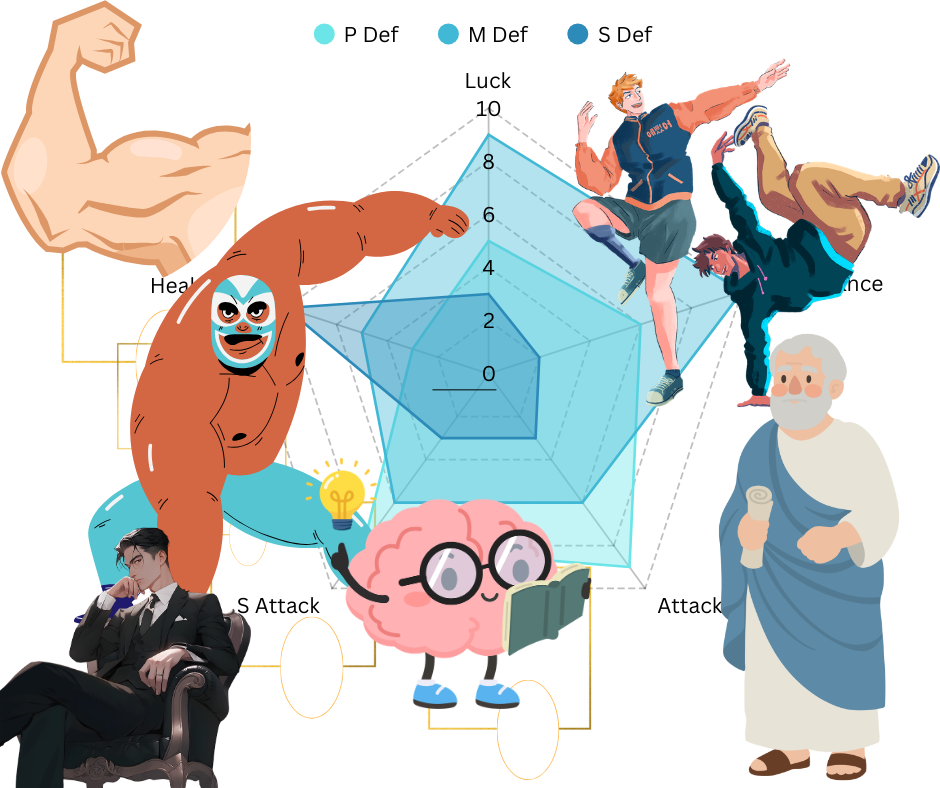
These two steps are covered in depth in an earlier post, so I won't reconstruct the full argument here. The short version: Threshold separates capability into two intersecting axes. Qualities—Force, Finesse, Essence—describe the shape of how a character engages with the world. Domains—Body, Mind, Spirit—describe the arena in which they operate. A character is defined not by a single capability score but by the intersection of how they act and where they're most at home.
What's worth noting in the context of the creation sequence is why these steps come here, after identity and before tools. By the time a player reaches Qualities and Domains, they've already answered who their character is, where they came from, and what their life looked like. The question "how do you face challenges" is now answerable in character terms rather than optimization terms. A player who established in Step 0 that their character is cautious and observant, raised in Step 2 by a community of traders who valued subtlety, is going to approach Finesse and Mind differently than a player who hasn't thought about any of that yet. The sequence makes the mechanical choice feel like a discovery rather than a selection.
Step 6: Kit — "What have you made your own?"
There's a meaningful difference between someone who has trained with a weapon for years and someone picking it up for the first time. Both can hold it. Both might even be dangerous with it. But the trained fighter has internalized something—a set of habits, instincts, and reflexes that don't require conscious thought. Kit is the system's way of representing that internalization.
The inspiration here came directly from Draw Steel, which uses a Kit system to give players a combat identity that isn't locked to a class. In class-based systems, combat identity tends to emerge from the class itself—a Fighter gets heavy armor proficiency and certain attack options; a Rogue gets light armor and precision strikes. Threshold is classless, which means that scaffolding doesn't exist. Kit fills the gap. It's the mechanism by which a player answers "what kind of combatant am I" without needing a class to answer it for them.
Kit defines your starting combat gear—the weapons and armor you already own and have trained with—along with a Signature Technique: a move that grows with your character across all four tiers of play. Kits also recommend technique trees that align with their fighting style, and reduce the Strain cost of techniques within those trees. This isn't a mechanical cage—players can learn techniques outside their Kit's recommendations freely—but it means investing within your Kit's style is more efficient than spreading across unrelated approaches. The combat identity is real without being mandatory.
This is also why starting equipment is handled through Kit rather than as a separate creation step. In class-based systems, equipment often comes bundled with class features because the class defines what you'd plausibly carry. In a classless system, the Kit does that work instead. Your initial combat gear—weapons, armor, shield if applicable—comes from what your Kit establishes. Tools, supplies, and other non-combat equipment are handled separately after creation, because those choices don't define who you are in a fight.
Kit comes before skill spending deliberately. An earlier version of the sequence placed Skills before Kit, which created a forward reference problem: players needed to know their Kit to make informed skill decisions, but Kit hadn't been chosen yet. Moving Kit earlier means players know their combat baseline before they start allocating AP. They're building outward from something established rather than guessing at what they'll need.
Step 7: Magic — "Can you feel the currents beneath the world?"
Not everyone can. This step functions as a genuine decision gate, and the gate matters in a classless system where magic is theoretically available to anyone willing to invest in it.
The question itself carries the weight of the decision. It's asking something real about the character: is this a person who has developed a relationship with magical Forces, or not? If yes, which Forms have they learned to shape, and which Tradition—Study, Innate, Devotion, or Willpower—governs how that connection works? If the answer is no, or not yet, move on. There's no pressure and no penalty.
The placement before skill spending is practical: players who want magical capability need to know that before they start allocating AP, because Form skills compete for the same budget as everything else. But the placement is also thematic—magic in Threshold isn't a class feature or a background perk. It's a choice about who your character is and what they're connected to. That choice belongs before the mundane accounting of skill investment.
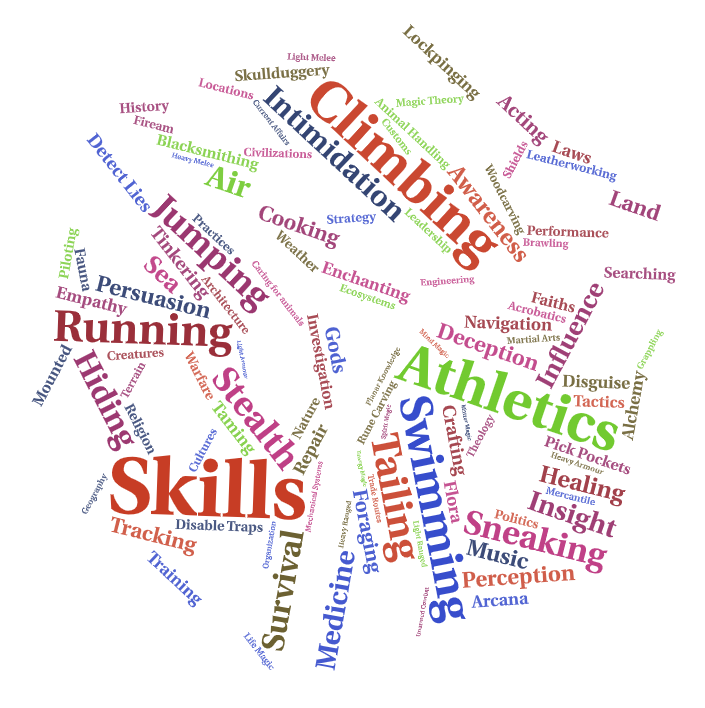
Step 8: Skills and Techniques — "What have you put real time into?"
Everything up to this point has been about identity: who you are, where you come from, how you engage with the world. This step is about investment—the things your character has deliberately practiced, studied, or trained in over years of their life before the campaign started.
Players spend their starting AP here on skills and, if they choose, on additional techniques beyond the one granted by Kit. The budget is shared: combat training, social skills, magical Form knowledge, craft expertise, and wilderness survival all compete for the same pool. You can't be exceptional at everything, and the choices you make here reveal something about how your character spent their time. A character who spread AP broadly is someone with wide experience and no deep specializations. A character who concentrated AP narrowly is someone with genuine expertise in a few areas and noticeable gaps in others. Both are legitimate. Both say something true.
The Kit has already covered the combat baseline—additional techniques here are optional deepening, not required completion. Players who aren't sure what techniques they want can leave that portion of their AP unspent and discover what the character needs in play.
Step 9: Health and Resources — "How much can you take?"
Stress is the buffer between your character and real harm. It represents the close calls, the near misses, the exhaustion of sustained effort and the accumulated toll of combat before anything truly breaks. Wounds are what's left when that buffer runs out—actual physical trauma with lasting mechanical consequences. This step calculates both, along with Mana if Step 7 established a magical connection.
Health and Resources come last because they're derived values. They're the mechanical output of everything that came before: Domains determine Stress pool, Qualities shape specific derived stats, Resonance and Attunement determine Mana capacity. You can't calculate how much a character can take until you know who they are. The step that intuitively feels like it should come first—"how tough is my character"—is actually the final summation of every prior decision. That's not a sequencing accident. It's the whole argument of the creation system made concrete: the person comes first. The numbers follow.
What Didn't Make It
The current sequence has ten steps. Earlier versions had twelve.
Equipment had its own step, sitting between Skills and Health. The reasoning was that players should know what gear they're carrying before finalizing their resources. In practice, equipment purchasing felt disconnected from the creative process of building a person. It's a transaction—you have a Wealth Score, you consult a list, you spend it, you record what you bought. That transaction is important to play, but it doesn't belong in the same conversation as Heritage and Concept. It's administrative work, not character work. Equipment purchasing now lives in its own standalone section, referenced after the creation sequence concludes rather than embedded in it.
Personality was the final step—structured prompts for traits, ideals, bonds, and flaws in the D&D 5e mold. Anyone who has run D&D at a table with new players knows how this goes: some players engage with these prompts earnestly and write something genuine, some roll on the random tables and accept whatever comes up, and most write something in session zero and never reference it again. The prompts exist, the boxes get filled, and then the sheet goes face-down on the table for the rest of the campaign.
I cut it entirely. If the first eight steps have done their job, a player who reaches Step 9 already knows their character's personality—it emerged from the answers they gave along the way. The concept they established in Step 0, the Heritage and Culture that shaped them, the Background rupture that brought them here: all of that is personality, already on the page. Adding a checklist of labeled traits afterward felt like asking someone to describe themselves after you've already spent an hour in conversation with them. The prompts were redundant at best and reductive at worst—an invitation to flatten a person into a set of boxes rather than carry them forward as someone real.
There was also a practical constraint that deserves to be named honestly. Character creation shouldn't consume an entire session. The steps that survived are the ones that require a genuine decision—either a meaningful creative choice or a deliberate mechanical allocation. Steps that were primarily administrative, or that recapped work the player had already done, got cut. Time at the table is finite. The sequence should respect that.
What's Next
The sequence is established. The next post goes deeper into Heritage and Culture—the Heritages of Threshold's world, what they communicate about the setting, and the design work behind keeping biological and cultural identity as separate choices.
Questions
When you build characters in TTRPGs, do you start with a concept and fit the mechanics to it, or do you start with the mechanics and discover the concept through them? Does the system you're playing push you toward one approach or the other?
For designers: how do you decide what belongs in character creation versus what can be deferred to play? Where do you draw the line between necessary upfront decisions and things the table will figure out naturally?